
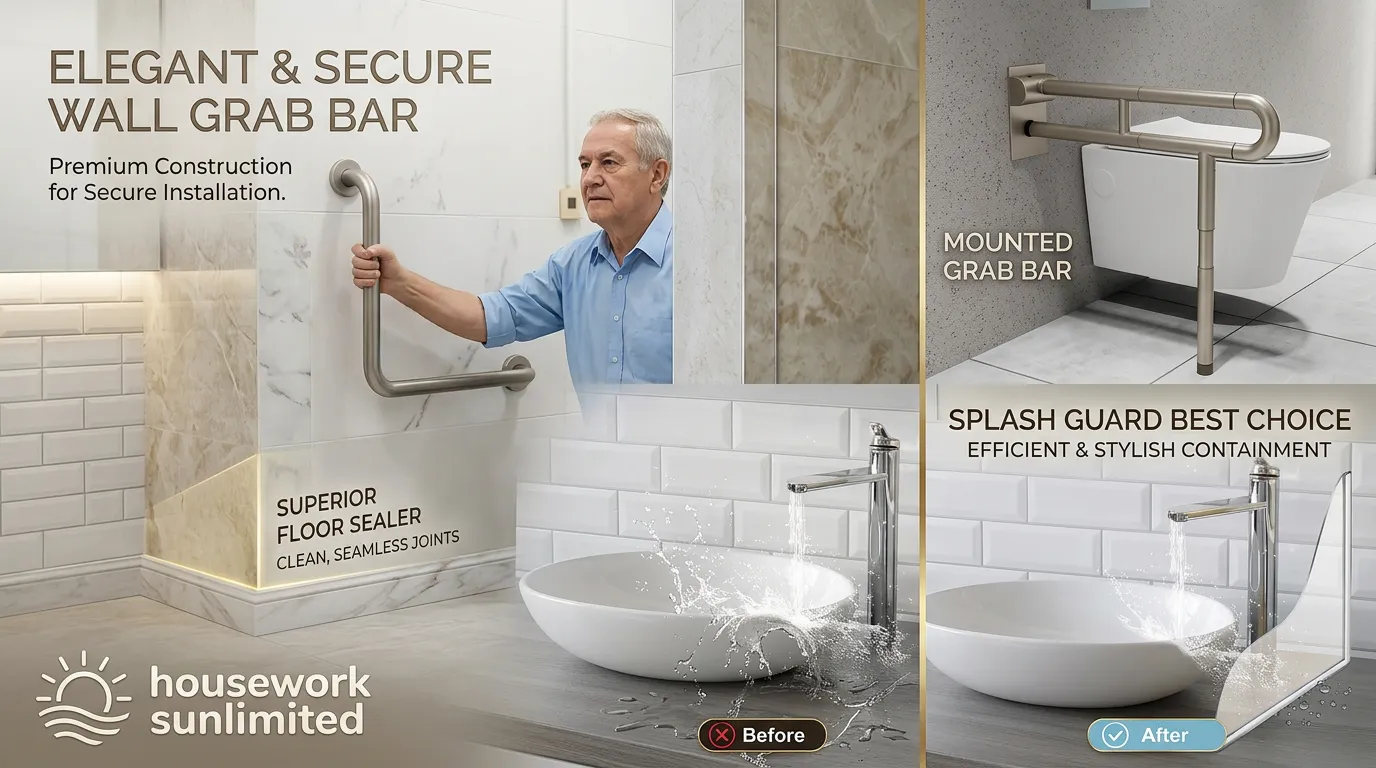
Bathroom guard installation, refers to the process of adding safety equipment in a bathroom to reduce the risk of slipping, falling, or getting injured. Bathrooms naturally have wet floors, limited space, and constant water exposure, which makes accidents more likely. Installing proper safety guards creates a secure environment for everyone, especially elderly people, children, and individuals with limited mobility. A well-planned setup improves both safety and daily comfort.
Main Purpose of Guard Installation
The main purpose of bathroom guards is to provide physical support and prevent accidents. Grab bars help users maintain balance when standing up or sitting down. Anti-slip surfaces reduce the chance of slipping on wet floors. Shower guards keep water contained within the bathing area. Each component works together to create a safer bathroom without reducing functionality or comfort.
Common Types of Bathroom Guards
Grab Bars (Safety Handles)
Grab bars are one of the most important safety features in a bathroom. You can install them near the toilet, inside the shower, or beside the bathtub. Stainless steel is the best material because it resists rust and supports heavy weight. Install them at a height of around 85–95 cm from the floor so users can easily reach them.
Anti-Slip Mats and Strips
Slippery floors often cause serious accidents. Anti-slip mats made of strong rubber help increase grip on wet surfaces. You can also use adhesive anti-slip strips on shower floors or walking paths to improve traction and safety.
Shower Guards or Panels
Shower guards control water flow and keep the rest of the bathroom dry. They usually come in tempered glass or durable plastic panels. Besides improving safety, they also make the bathroom look cleaner and more modern.
Toilet Safety Frames
Toilet safety frames provide extra support when sitting or standing. They are especially useful for elderly users or people recovering from injuries. These frames are usually adjustable and easy to install without major construction work.
Proper Installation Steps
Planning the Layout
Start by identifying the most important areas where support is needed. Focus on high-risk zones such as the shower, toilet area, and bathtub.
Secure Installation Process
Locate wall studs before installing grab bars to ensure strong support. Use a stud finder and mark drilling points carefully. Drill through tiles slowly to avoid cracks, then secure the bars using strong screws.
Final Safety Check
After installation, apply silicone sealant around drilled areas to prevent water damage. Test each installed guard by applying pressure to ensure stability and safety.
Tips for Choosing Quality Bathroom Guards
Choose materials that resist water, rust, and corrosion. Make sure each guard can support at least 100–150 kg of weight. Avoid relying on suction-based grab bars for permanent use since they can lose grip over time. Prioritize ergonomic designs that are comfortable and easy to use.
Conclusion
Bathroom guard installation plays a crucial role in preventing accidents and improving safety. With the right selection and proper installation, a bathroom becomes a safer, more comfortable, and more functional space for everyone.
Leave a Reply