
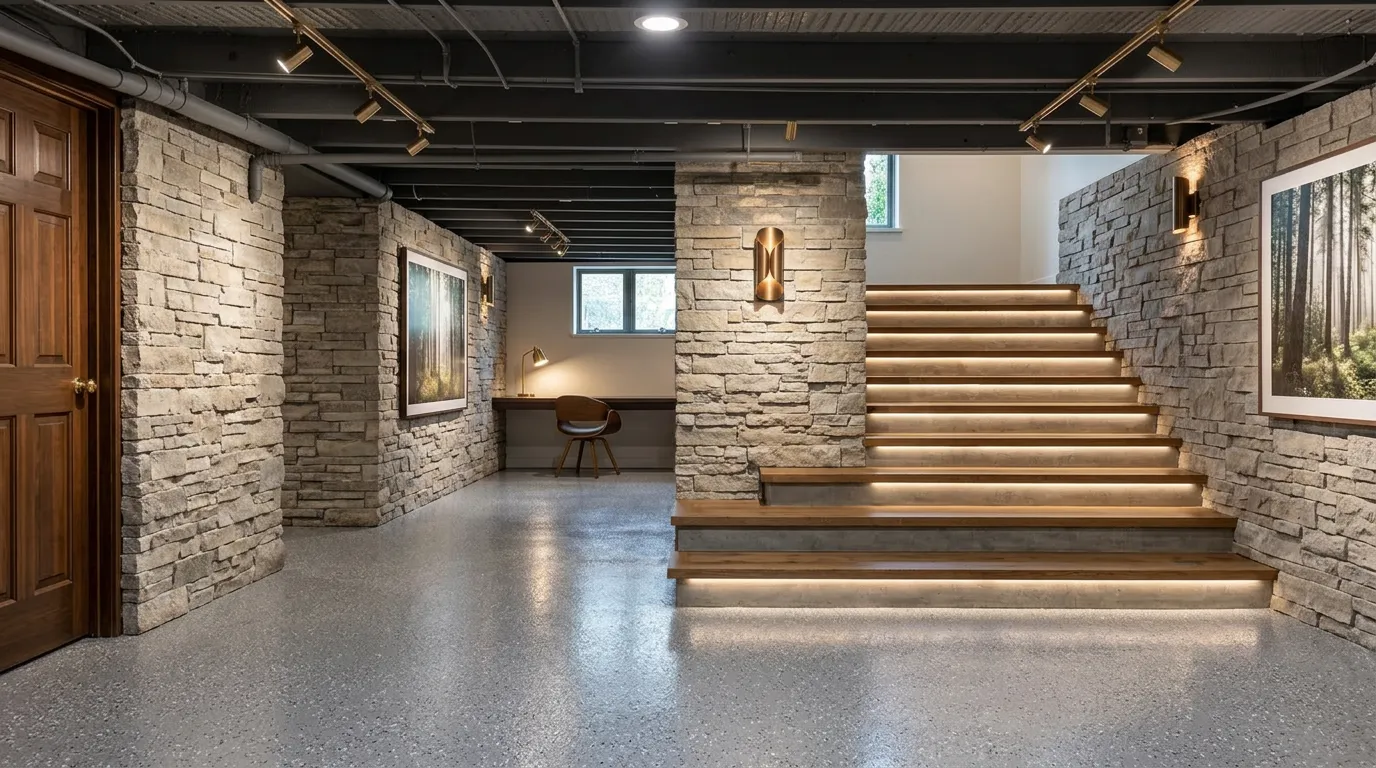
Introduction
Design-Build Basement House, Building a house with a basement requires careful planning, precise engineering, and strong coordination. Moreover, homeowners increasingly choose the design-build process because it simplifies construction while improving safety and efficiency. Additionally, this method integrates both design and construction under one team, which reduces errors and enhances communication. Therefore, when constructing a home with an underground level, the design-build approach becomes highly valuable for ensuring structural safety and long-term durability.Design-Build Basement House
What is the Design-Build Process?
The design-build process is a streamlined construction method where one entity handles both architectural design and building execution. Furthermore, this approach eliminates the traditional gap between architects and contractors, which often causes delays and miscommunication. In addition, the unified team works collaboratively from concept to completion, ensuring that every design decision aligns with practical construction methods. Consequently, homeowners gain better cost control, faster project delivery, and improved quality assurance.
Basement Construction and Safety Considerations
Building a basement requires advanced structural planning and strict safety standards. Moreover, engineers must evaluate soil conditions, groundwater levels, and load-bearing capacity before construction begins. Additionally, proper waterproofing systems must be installed to prevent water infiltration and structural damage. Therefore, drainage systems, sump pumps, and reinforced concrete walls play a crucial role in maintaining basement stability. Furthermore, ventilation systems must be designed carefully to ensure healthy air circulation and prevent moisture buildup, which could lead to mold growth.
Key Steps in the Design-Build Basement Process
Initially, the design-build team conducts a site analysis to understand environmental and geological conditions. Moreover, they create a customized architectural plan that includes basement integration. After that, structural engineers design reinforced foundations that support both above-ground and underground levels.
Additionally, excavation begins with strict safety monitoring to prevent soil collapse. Furthermore, builders install waterproof membranes and drainage systems during the foundation phase. Consequently, the structure gains long-term protection against water damage.
Moreover, construction continues with reinforced concrete pouring, steel framing, and insulation installation. In addition, mechanical systems such as plumbing, electrical wiring, and ventilation are integrated seamlessly into the structure. Therefore, every stage follows a coordinated workflow that minimizes risks and enhances efficiency.
Benefits of Using the Design-Build Approach
The design-build method offers several advantages, especially for basement homes. Moreover, it reduces project delays because all teams work under one contract. Additionally, it improves communication, which leads to faster decision-making and fewer design conflicts. Furthermore, cost efficiency increases because the team can adjust materials and methods in real time.
Consequently, homeowners receive a safer and more structurally sound basement home. In addition, the process ensures compliance with building codes and safety regulations, which is essential for underground construction. Therefore, the design-build approach delivers both quality and peace of mind.
Conclusion
In conclusion, constructing a house with a basement requires careful coordination, advanced engineering, and strict safety measures. Moreover, the design-build process simplifies this complexity by uniting design and construction into one efficient system. Additionally, this approach ensures structural integrity, waterproofing protection, and long-term safety. Therefore, homeowners who choose the design-build method can confidently build basement homes that are both safe and durable for the future.

Leave a Reply