
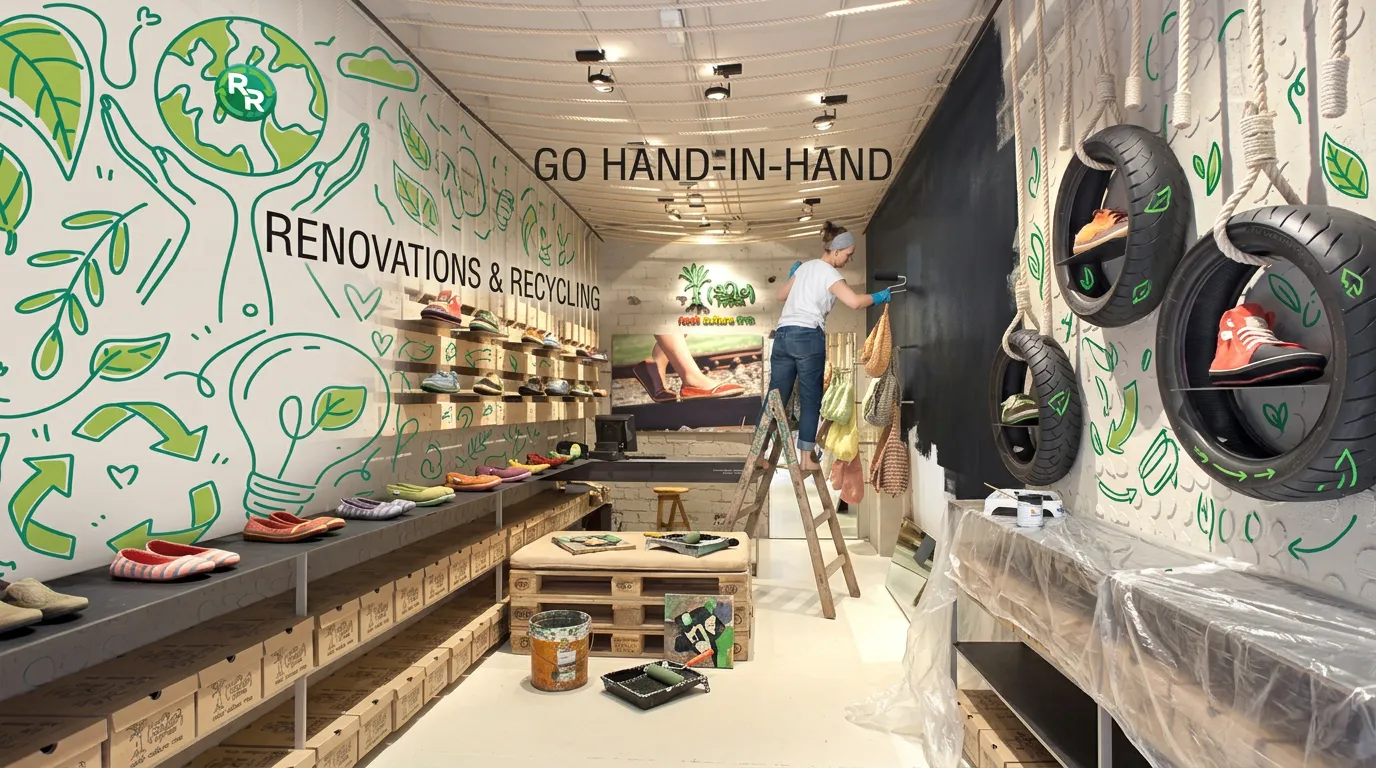
store renovation recycled materials, is becoming a powerful trend in the retail industry. Businesses no longer focus only on visual appeal and customer experience, but also on environmental responsibility. As sustainability gains importance, many store owners now choose eco-friendly renovation strategies that reduce waste and lower construction impact.
Why Recycled Materials Matter in Store Renovation
Retailers increasingly turn to recycled materials because they offer both environmental and financial benefits. Instead of relying on new raw materials, businesses reuse wood, metal, glass, and plastic that already exist. This approach reduces landfill waste and decreases demand for resource extraction.
At the same time, recycled materials often cost less than brand-new construction supplies. Store owners can reduce renovation budgets while still achieving a modern and creative store design. As a result, sustainability and profitability go hand in hand.
Creative Design Opportunities for Modern Stores
Recycled materials open the door to unique and creative store interiors. Designers use reclaimed wood to build shelves, display tables, and wall features. In addition, recycled metal becomes strong framing for industrial-style decorations, while repurposed glass adds elegance to lighting and storefront windows.
Moreover, many retailers now combine recycled materials with modern design concepts. This mix creates a distinctive store identity that attracts environmentally conscious customers. Because shoppers value sustainability more than ever, eco-designed stores often gain stronger brand loyalty.
Environmental Benefits of Sustainable Renovation
Store renovation with recycled materials significantly reduces environmental impact. First, it lowers the amount of construction waste sent to landfills. Second, it decreases carbon emissions produced during manufacturing of new materials. Finally, it supports circular economy practices where resources stay in use longer.
In addition, sustainable renovation helps businesses align with global environmental goals. Many companies now follow green building standards to demonstrate corporate responsibility. This approach improves public perception and strengthens brand reputation in competitive markets.
Cost Efficiency and Long-Term Value
Besides environmental advantages, recycled materials also provide long-term financial benefits. Store owners save money on raw materials and often reduce disposal costs during renovation projects. Furthermore, durable recycled components can last as long as traditional materials when properly treated.
Over time, energy-efficient design choices such as recycled insulation or repurposed lighting fixtures also help reduce operational costs. Therefore, investing in sustainable renovation becomes a strategic business decision rather than just an aesthetic choice.
Growing Consumer Demand for Eco-Friendly Stores
Modern consumers actively support businesses that care about the environment. Shoppers often prefer stores that demonstrate sustainable practices, including the use of recycled materials. This trend encourages more retailers to redesign their spaces in eco-conscious ways.
Additionally, eco-friendly stores often create stronger emotional connections with customers. When shoppers see sustainability in action, they feel more confident supporting the brand. As a result, store renovation becomes a marketing advantage as well as a design improvement.
The Future of Sustainable Retail Design
Store renovation using recycled materials continues to grow as a global movement. Architects and designers now prioritize sustainability in every stage of planning. With increasing awareness of environmental issues, more businesses will adopt eco-friendly construction methods.
In conclusion, recycled materials transform store renovation into a responsible, cost-effective, and creative process. Retailers that embrace this approach not only improve their store appearance but also contribute to a greener future.

Leave a Reply